How to Remove Pet Hair From a Couch
Pet hair embeds itself in upholstery because static charge and fabric texture hold it tighter than surface contact alone. A lint roller handles loose strands but misses anything below the top layer. Here are the methods that actually pull hair out of couch fabric, ranked by how deeply they clean and how little they cost.
Time to read
7 min
Sections
7 + FAQ
When you buy through our links, we may earn a commission at no extra cost to you. That never changes what we recommend.
How to remove pet hair from a couch with rubber gloves
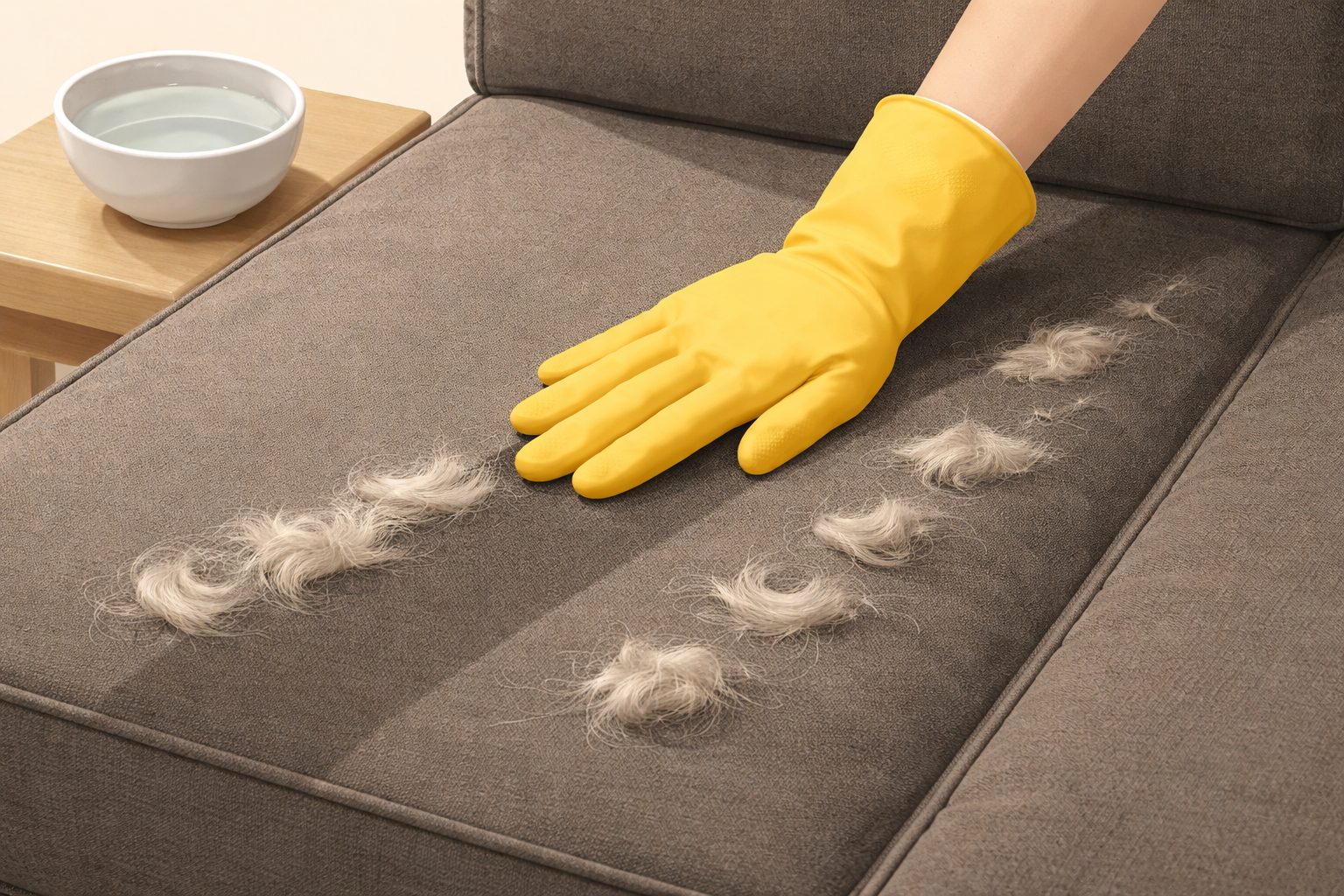
A damp rubber glove is the most recommended free method across pet owner communities. The rubber surface creates friction against the fabric, which balls up loose and semi-embedded hair into clumps you can pick off by hand.
Standard dishwashing gloves from any grocery store work. The thicker the rubber, the better the grip. Dampening the glove first improves the friction and helps the rubber grab hair that sits below the surface layer.
This method works best on tightly woven fabrics like microfiber and most polyester blends. On loose-weave fabrics like linen or chenille, the glove catches on the fabric itself and pulls threads instead of hair. Test a hidden spot first.
Work in one direction, not back and forth. One-directional strokes ball the hair into clumps. Scrubbing scatters it. Keep a bowl of water nearby to rinse the glove when it gets coated. Wet rubber grips better, and rinsing clears collected hair so the surface stays effective.
Cost is zero if you already own dishwashing gloves. A new pair runs about two dollars and lasts months.
Dampen a rubber dishwashing glove
Dip the glove in a bowl of water and shake off the excess. You want the surface damp, not dripping. Wet rubber creates more friction against fabric than dry.
Wipe the couch in one direction using firm strokes
Run your gloved hand across the fabric in one consistent direction. Do not scrub back and forth. One-directional strokes ball the hair into clumps instead of scattering it. Work one cushion at a time.
Collect the hair clumps
As hair accumulates in visible clumps on the fabric, pick them up and drop them in a trash bag. The clumps form because friction pulls individual hairs together.
Rinse the glove and repeat
Dip the glove back in the water bowl to clear collected hair from the rubber surface. Move to the next cushion. Repeat until the entire couch is done.
Follow up with a damp cloth for remaining fine hair
A slightly damp microfiber cloth picks up the finest remaining strands. This step is optional but makes a visible difference on dark upholstery.
The squeegee method
A rubber squeegee pulls embedded pet hair out of upholstery using the same friction principle as rubber gloves, but with a rigid edge that covers more surface area per pass. Pet owners and auto detailers both recommend this approach.
The rubber blade drags across the fabric and pulls hair into lines that you can vacuum or pick up. It works especially well on piled fabrics like velvet and microfiber, where the rigid edge reaches deeper into the weave than a gloved hand.
Use the squeegee dry. Drag it in one direction with moderate pressure. The hair collects in visible lines ahead of the blade. After each pass, wipe the collected hair off the blade edge.
A basic shower squeegee costs three to five dollars at any hardware store. Silicone squeegees work slightly better than hard rubber because the softer edge conforms to cushion curves without scratching.
The limitation is flat surfaces only. A squeegee cannot reach into seams, between cushions, or along piping. For those areas, use rubber gloves or a crevice vacuum attachment.
Reusable roller method
Reusable rollers like the ChomChom generate electrostatic charge through back-and-forth motion. That charge pulls hair out of fabric and into a collection chamber. No adhesive sheets, no batteries, no refill cost.
The key difference between a reusable roller and a lint roller is depth. Lint roller adhesive grabs what sits on top of the fabric. An electrostatic roller pulls hair that is partially embedded in the weave. For couches where hair works itself into upholstery over hours of sitting and shifting, that depth matters.
The technique is critical. You must roll back and forth in short strokes, not just push forward. One-directional rolling does almost nothing because the mechanism depends on generating charge in both directions. This is the most common reason people say reusable rollers do not work. Owner after owner repeats the same advice: short back-and-forth motions.
Reusable rollers are faster than rubber gloves on medium-weave upholstery but slower than a vacuum with an upholstery attachment. The advantage is they are quieter, portable, and work without a power outlet. For a quick pass before guests arrive, a reusable roller trades speed for silence.
See our full comparison in the best pet hair remover guide.
Vacuum with upholstery attachment
A vacuum with a motorized upholstery brush is the fastest method for heavy hair coverage across every cushion. The spinning bristles agitate the fabric and loosen embedded hair while suction pulls it away.
Not every vacuum attachment works equally. A crevice tool and a basic fabric nozzle pick up loose surface hair but miss embedded strands. A motorized brush head is what separates a thorough clean from a surface pass. If your vacuum came with a small powered attachment, use that one.
Cordless stick vacuums with dedicated pet tools are the most practical option. Grab it from a wall mount, clean the couch in two minutes, put it back. A full-size upright works too, but the cord and weight make it less likely you will use it regularly. The tool you actually use daily beats the one that stays in the closet.
The limitation is fabric type. Motorized brushes can snag on loose-weave fabrics, velvet, and anything with fringe or decorative stitching. On those surfaces, switch to the plain upholstery nozzle or use a rubber glove instead.
The fabric softener spray trick
This method circulates in pet owner communities and auto detailing forums. Mix a quarter cup of liquid fabric softener with water in a spray bottle. Spray it lightly across the couch surface. Wait five minutes. Then vacuum.
The softener reduces the static bond between hair and fabric. Hair that was clinging to the upholstery loosens and releases more easily during the vacuum pass. Owners who have tried it on both furniture and car interiors report noticeably more hair pickup than vacuuming alone.
A dryer sheet works on the same principle but covers less area. Rub a dryer sheet across each cushion to reduce surface static before cleaning with a roller or vacuum. The effect fades within a day or two as static rebuilds. This is a prep step for a cleaning session, not a permanent treatment.
Two cautions. Do not saturate the fabric. A light mist is enough. Excess moisture can water-stain some upholstery. Use unscented products if your pet sleeps on the couch. Scented fabric softener leaves fragrance residue that some cats avoid and some dogs obsessively roll on.
Fabric-specific tips
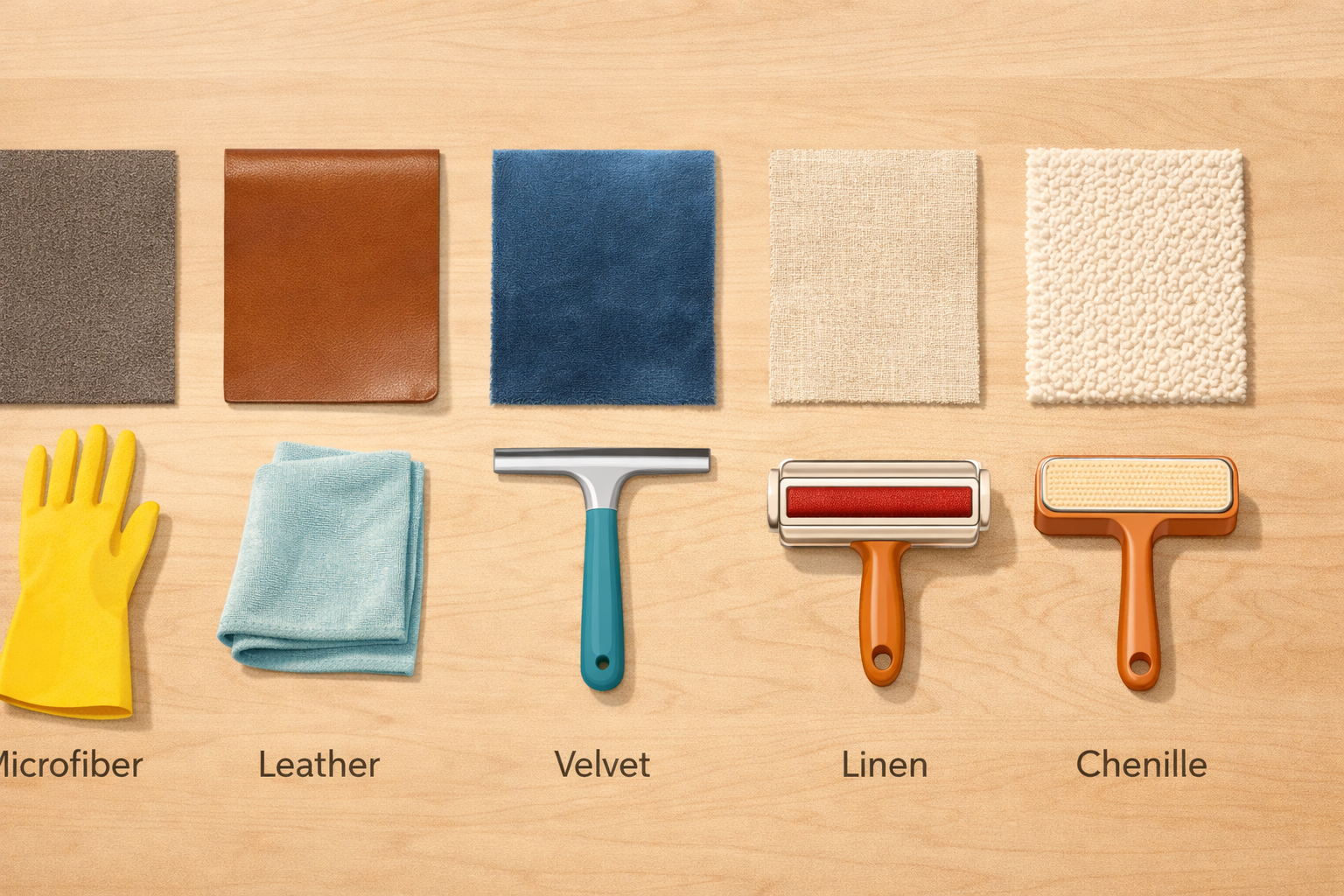
Different upholstery fabrics hold pet hair differently. The wrong tool on the wrong fabric either damages the material or wastes your time.
Microfiber holds pet hair tightly because the ultra-fine fibers create strong static. A damp rubber glove is the most effective tool here. The friction overcomes the static grip without damaging the weave. Reusable rollers also work but require more passes.
Leather and faux leather are the easiest surfaces. Hair sits on top rather than embedding. A damp microfiber cloth or a vacuum with a soft brush attachment is all you need. Avoid rubber gloves on leather. The friction can leave marks on finished surfaces.
Velvet traps hair between the pile fibers. A squeegee or a lint roller works here. Rubber gloves catch on velvet pile and can damage it. Vacuum only with a plain nozzle, no motorized brushes.
Linen and loose-weave fabrics let hair slip between threads and anchor deep. A reusable electrostatic roller works better than a rubber glove here. The charge pulls hair from deeper without catching on loose threads.
Chenille is the hardest. The looped texture traps hair at every level. A lint roller handles the surface, but embedded hair requires a stiff fabric brush or repeated vacuum passes. If you have a heavy-shedding pet and chenille furniture, prevention matters more than cleaning tools.
Prevention: reduce hair before it reaches the couch
No prevention method eliminates pet hair from furniture entirely. But the right combination reduces how often you need to deep-clean.
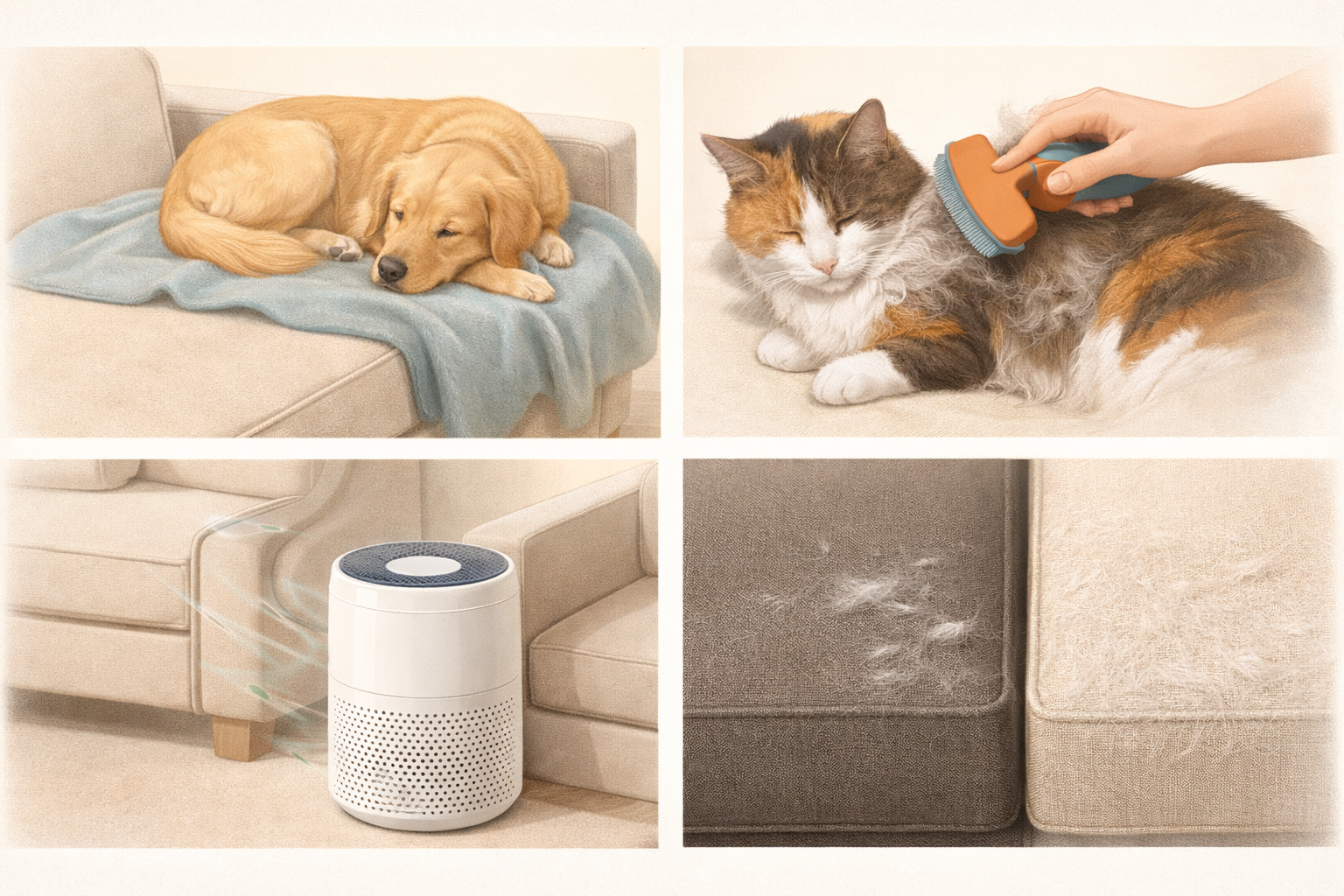
Washable couch covers or throws. A heavy throw blanket over the main sitting area catches most hair before it reaches the upholstery. Wash weekly. This one change cuts couch cleaning frequency roughly in half.
Regular brushing. A 5-minute brushing session every other day removes loose fur before it lands on furniture. Deshedding tools pull undercoat hair that would otherwise shed over the next day or two. Hair on the brush is hair not on the couch.
Fabric choice for your next couch. Leather, tightly woven synthetics, and canvas-type fabrics release pet hair far more easily than velvet, chenille, or loose-weave linen. If you are shopping for a new couch, the fabric decision will save you more daily time than any tool on this page.
Air purifiers. A HEPA air purifier with a washable pre-filter captures airborne pet hair before it settles on surfaces. A meaningful portion of pet hair reaches furniture by floating through the air, not just by direct pet contact.
FAQ
1What removes pet hair from a couch the fastest?
A vacuum with a motorized upholstery brush is the fastest method for heavy hair coverage. For lighter daily maintenance, a reusable electrostatic roller like the ChomChom cleans a full couch in about three minutes without noise or cords.
2Do rubber gloves really work for pet hair on furniture?
Yes. A damp rubber dishwashing glove creates friction that balls up embedded hair into clumps you can pick off. It works best on tightly woven fabrics like microfiber. On loose-weave fabrics like linen or chenille, the glove catches threads instead of hair.
3How do I keep pet hair off my couch between cleanings?
A washable throw blanket or fitted couch cover is the most effective prevention. Wash it weekly. Brushing your pet every other day removes loose undercoat before it sheds onto furniture. Together they cut cleanup frequency roughly in half.
4Does fabric softener help remove pet hair from a couch?
A diluted fabric softener spray reduces the static bond between hair and fabric. Spray lightly, wait five minutes, then vacuum. It works as a prep step to make vacuuming more effective, not as a standalone method. Do not saturate the fabric.
5Is a lint roller or a reusable roller better for couch pet hair?
A reusable electrostatic roller removes more embedded hair because the charge pulls from below the surface. A disposable lint roller is faster for light surface hair but costs more over time due to sheet refills. For daily furniture maintenance, a reusable roller is the better long-term investment.
6How do I remove pet hair from a microfiber couch?
Microfiber holds hair tightly due to strong static in the ultra-fine fibers. A damp rubber dishwashing glove is the most effective tool. The friction overcomes the static grip. Work in one direction, rinse the glove frequently, and follow up with a damp microfiber cloth for remaining fine strands.
Find the right litter for your home
The right litter prevents most odor and cleanup problems before they start. These guides cover the tradeoffs that matter.