How to Remove Pet Hair From Clothes
Pet hair on clothes is a friction and static problem. Hair clings to fabric because the charge difference between animal fur and textile fibers creates a bond that casual brushing does not break. Here are the methods that actually work, from the 30-second fix before you walk out the door to laundry techniques that reduce hair buildup across your entire wardrobe.
Time to read
7 min
Sections
6 + FAQ
When you buy through our links, we may earn a commission at no extra cost to you. That never changes what we recommend.
Lint roller technique that actually clears the fabric
A lint roller is the fastest tool for pet hair on clothes, but most people use it wrong. Rolling in random directions spreads hair around instead of lifting it off.
Roll in one direction only. Start at the top of the garment and roll downward in slow, overlapping passes. One-directional rolling lets the adhesive sheet grab hair on the first contact instead of pressing it back into the fabric on the return stroke.
Replace sheets often. A full adhesive sheet picks up more per pass than a half-covered one. Peel a fresh sheet the moment the current one starts picking up less. Trying to squeeze extra life out of a spent sheet wastes time and leaves hair behind.
Use a large-format roller for coats and pants. Standard-width lint rollers are designed for shirt fronts. A large-surface roller — like the Scotch-Brite 8-inch model — covers pants, jackets, and long sleeves in half the passes. The per-sheet cost is higher, but the time savings are real when you are cleaning an outfit before leaving.
For people who lint-roll daily, the refill cost adds up. A household going through a roll per week spends roughly $5-8 per month on sheets. If that number bothers you, a reusable electrostatic roller handles most of the same job without ongoing cost — but adhesive rollers still win on speed for a quick doorway pass.
Dryer method for bulk hair removal
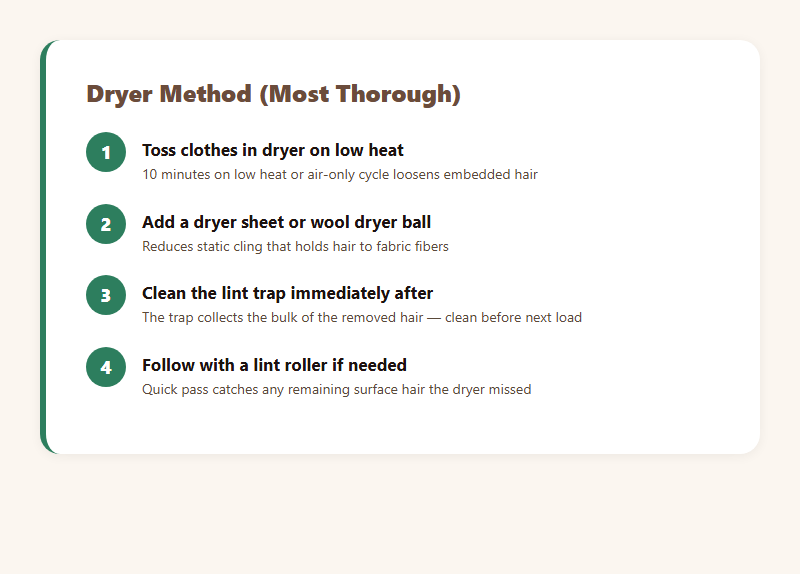
Running clothes through the dryer for 10 minutes on low heat before washing loosens pet hair so the lint trap catches it instead of the washing machine drain. This is the single most effective laundry technique for pet hair and the one most people skip.
The heat softens the static bond between hair and fabric. The tumbling action shakes hair loose. The lint trap collects it. Without this step, pet hair goes into the wash water, clogs the drain filter, and redistributes across every item in the load.
This works on everyday clothing — t-shirts, jeans, sweatshirts, towels, bedding. It does not work on delicates, wool, or anything that should not go in a dryer. Check the care label first.
Clean the lint trap before and after the cycle. A full trap cannot catch hair. If the trap is coated before you start, the dryer just moves hair around instead of removing it.
Clean the lint trap completely
Remove any lint or hair from the previous cycle. A full trap captures nothing. Wipe the screen with your hand or a damp cloth until it is clear.
Load the hairy clothes loosely into the dryer
Do not pack the dryer full. Hair releases better when clothes have room to tumble freely. Fill the drum no more than two-thirds full.
Add a dryer sheet or wool dryer ball
A dryer sheet reduces static, which loosens the bond between hair and fabric. Wool dryer balls work similarly by physically agitating clothes during tumbling. Either option helps. Using both does not double the effect.
Run on low heat for 10 minutes
Ten minutes on low heat is enough to loosen most hair without shrinking or damaging clothes. High heat is unnecessary and risks damage. Do not run a full drying cycle — the goal is hair removal, not drying.
Clean the lint trap again and inspect
The trap should be visibly full of pet hair. If it is not, the load was too tightly packed or the trap was full at the start. Shake out each item and check for remaining hair before loading into the washer.
Washing machine tips to keep hair from redistributing
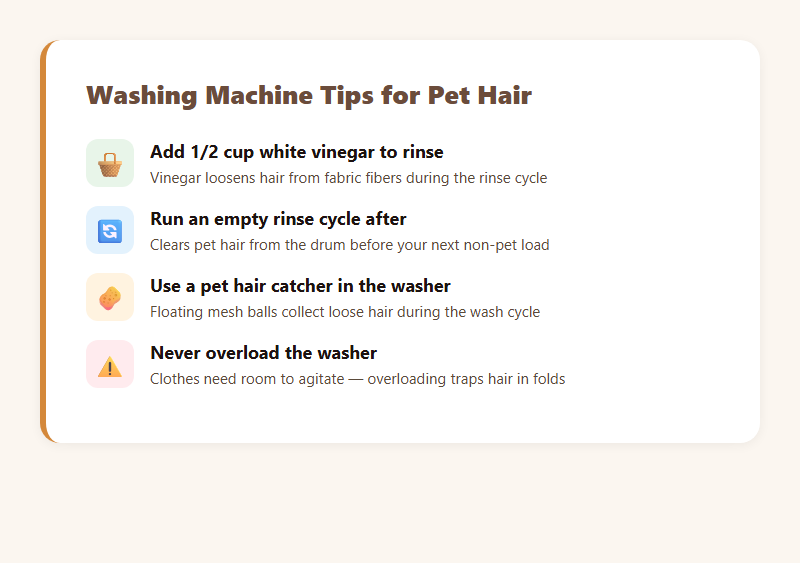
The washing machine is where pet hair problems get worse if you do not manage them. Hair that enters the wash cycle does not dissolve. It floats in the water, tangles with other fibers, and redistributes across every garment in the load. Clean clothes come out with more hair than they went in with if a heavily-shed item is in the same load.
Run the dryer pre-cycle first. This removes most hair before it reaches the wash water. If you only follow one tip from this page, this is the one.
Wash pet-heavy items separately. Do not mix the dog bed cover with your work shirts. Hair transfers freely in wash water, and a single heavily-shed item contaminates the entire load.
Use liquid detergent, not powder. Powder detergent granules can trap hair against fabric during the wash cycle. Liquid detergent dissolves fully and lets hair flow freely toward the drain.
Add a half cup of white vinegar to the rinse cycle. Vinegar softens fabric fibers, which releases trapped hair. It also reduces static in the dryer cycle that follows. The smell does not survive the rinse.
Run an empty rinse cycle after heavy loads. If the previous load had visible pet hair, run the machine empty on a quick rinse to flush hair from the drum and drain before loading clean clothes.
Check the drain filter monthly. Most front-load washers have an accessible drain filter. Pet hair accumulates there over time and reduces drainage. A clogged filter means hair-laden water sits with your clothes longer.
Fabric-specific advice
Not every fabric holds pet hair the same way. The wrong removal method on the wrong fabric either wastes your time or damages the garment.
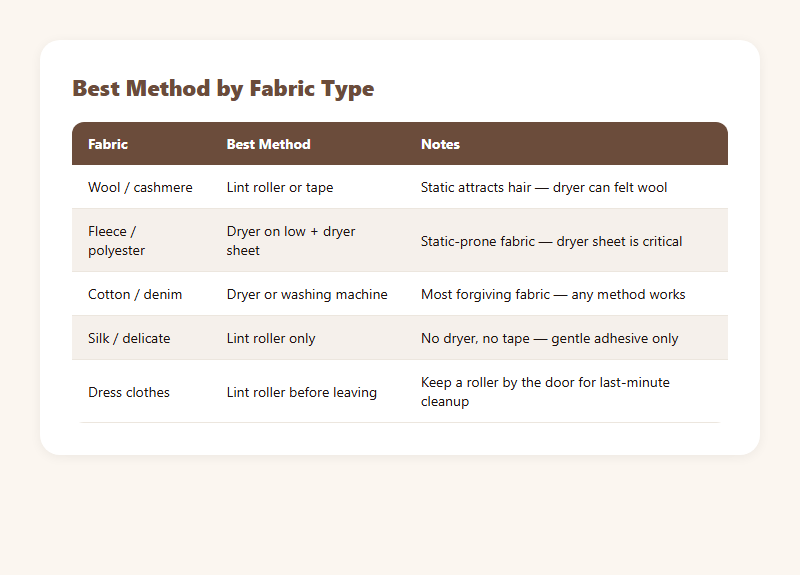
Fleece and polyester attract pet hair more aggressively than any other common fabric. The synthetic fibers generate static that bonds hair to the surface and the interior pile. A lint roller handles the surface, but the dryer pre-cycle method is the only reliable way to clear hair from fleece interiors. If you wear fleece daily in a pet household, expect to lint-roll every time you leave.
Wool and wool blends hold hair in the fiber texture. Lint rollers work, but the adhesive can pull wool fibers along with the hair, especially on fine knits. A fabric brush or a garment stone is gentler. Brush in one direction only, following the grain of the knit.
Cotton releases hair more easily than synthetics because cotton generates less static. A lint roller or a damp hand pass usually handles it. The dryer pre-cycle works well on cotton without risk of damage.
Silk and delicate synthetics should not go in the dryer. Use a lint roller with a light touch or a strip of packing tape wrapped around your hand, sticky side out. Velvet-surface lint brushes also work on delicates without pulling threads.
Dress clothes and suits need care. Do not use a rubber glove or aggressive roller. A high-quality garment brush with natural bristles removes surface hair without damaging the weave. Brush in one direction. Store dress clothes in a closed closet or garment bag — prevention is easier than cleanup on these fabrics.
Black clothing shows every strand regardless of removal method. The dryer pre-cycle plus a lint roller pass before you walk out is the minimum routine. Storing black clothes in a separate section of the closet, away from pet-accessible areas, makes the biggest difference.
Quick fixes when you have no tools
Sometimes you notice pet hair on your clothes at the office, in a car, or somewhere without a lint roller. These are not ideal methods, but they work in a pinch.
Damp hands. Wet your hands slightly and run them over the fabric in one direction. The moisture creates enough surface tension to pick up loose hair. Wipe your hands on a paper towel and repeat. This works on cotton and smooth synthetics but poorly on fleece.
Packing tape or masking tape. Wrap a strip around your hand with the sticky side out and press it against the fabric. This is a slower lint roller. It works and it is available at most workplaces.
Rubber-soled shoes. If you are truly desperate, the rubber sole of a clean shoe can be rubbed across fabric in one direction to ball up hair via friction. The same principle as the rubber glove method, just less dignified.
Pumice stone or fabric shaver. Some people carry a small pumice stone that doubles as a de-piller and de-hairer. It works on sturdy fabrics like jeans and sweatshirts. Do not use it on delicates or knits.
Prevention strategies
Removing pet hair from clothes is a repeating chore. Reducing how much hair gets on clothes in the first place saves more time than any tool.
Brush your pet regularly. A 5-minute brushing session every other day captures loose undercoat before it sheds onto your clothes, furniture, and floors. During heavy shedding seasons, daily brushing is worth the time.
Designate pet-free zones for clean clothes. Keep bedroom closet doors closed. Store freshly laundered clothes in drawers or garment bags. A closed closet does more than any lint roller because hair cannot reach what it cannot access.
Change before and after pet time. If you work from home and cuddle a pet during the day, change into pet-designated clothes for that time and change into clean clothes before leaving. Two minutes of changing saves five minutes of lint rolling.
Choose fabrics that release hair. Tightly woven cotton, denim, and smooth synthetic blends shed pet hair much more easily than fleece, wool, or chenille knits. If you are shopping for everyday clothes and you have pets, fabric choice is the most underrated prevention tool.
Keep a lint roller by the door. A final pass before you leave catches what you missed. This does not prevent hair from getting on clothes, but it ensures you do not walk out wearing it.
FAQ
1What is the fastest way to get pet hair off clothes?
A lint roller with one-directional downward strokes is the fastest at-home method. It takes about 30 seconds per garment. For bulk clothing, running a load through the dryer on low heat for 10 minutes before washing removes the most hair with the least effort per item.
2Does the dryer remove pet hair from clothes?
Yes. A 10-minute tumble on low heat loosens pet hair so the lint trap catches it. This works better as a pre-wash step than as a post-wash step because it prevents hair from entering the wash water and redistributing across the entire load.
3Why do my clothes still have pet hair after washing?
Pet hair does not dissolve in wash water. It floats, tangles with other fibers, and redistributes across every item in the load. The fix is to run hairy clothes through the dryer for 10 minutes before washing, and to wash heavily-shed items separately from clean clothes.
4How do I keep pet hair off black clothes?
Store black clothes in a closed closet or garment bag away from pet-accessible areas. Before wearing, use a lint roller in one-directional strokes. The dryer pre-cycle method also helps for black items that are machine-safe. Fabric choice matters too — tightly woven cotton and smooth synthetics show less hair than fleece or knits.
5Do wool dryer balls help with pet hair?
Yes. Wool dryer balls agitate clothes during tumbling, which loosens pet hair so the lint trap can catch it. They work about as well as dryer sheets for this purpose but do not reduce static as effectively. Using a dryer sheet and a wool dryer ball together does not double the effect — one or the other is sufficient.
Find the right litter for your home
The right litter prevents most odor and cleanup problems before they start. These guides cover the tradeoffs that matter.