How Often to Change Cat Litter
Change clumping clay litter completely every 2 to 4 weeks with daily scooping. Non-clumping litter needs a full change every 5 to 7 days. Here is the full schedule by litter type, plus the daily routine that keeps the box usable between complete changes.
Time to read
6 min
Sections
6 + FAQ
When you buy through our links, we may earn a commission at no extra cost to you. That never changes what we recommend.
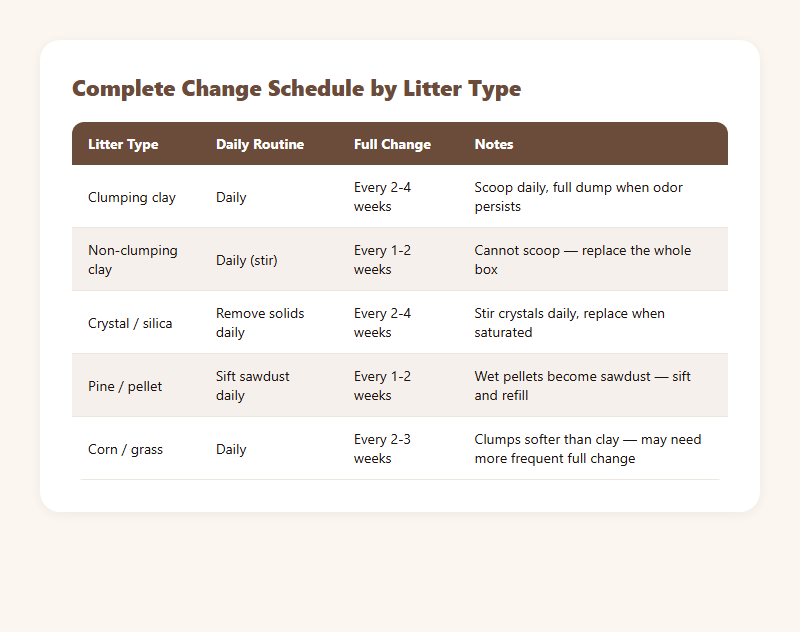
Complete change schedule by litter type
The right replacement frequency depends on the litter type, how many cats use the box, and how consistently you scoop. Here are the baselines for a single-cat home with daily scooping.
Clumping clay litter: Full change every 2 to 4 weeks. Clumping litter isolates waste into scoopable clumps, so the surrounding litter stays cleaner longer. After 2 to 4 weeks, enough fine particles, dust, and residual odor accumulate that the remaining litter stops performing well. Dump everything, wash the box, and refill.
Non-clumping clay litter: Full change every 5 to 7 days. Non-clumping litter absorbs urine but does not isolate it into removable clumps. The moisture spreads through the bed evenly, and the entire contents need replacing once saturation reaches a point where odor cannot be managed by scooping alone.
Silica crystal litter: Full change every 2 to 4 weeks for one cat. Crystals absorb liquid and lock odor inside their structure. When the crystals stop absorbing — you will notice liquid pooling on top instead of being drawn in — the litter is spent. Stir the crystals every few days to expose fresh surfaces and extend the working life.
Pellet litter (pine, paper, grass): Full change every 1 to 2 weeks. Pellets absorb moisture and break down into sawdust or pulp. Once most of the pellets have disintegrated, the litter is spent and needs replacing. The breakdown is visible, which makes timing easier than with other types.
These timelines assume daily scooping. Skip scooping for two or three days and every timeline above compresses significantly.
Daily scooping routine
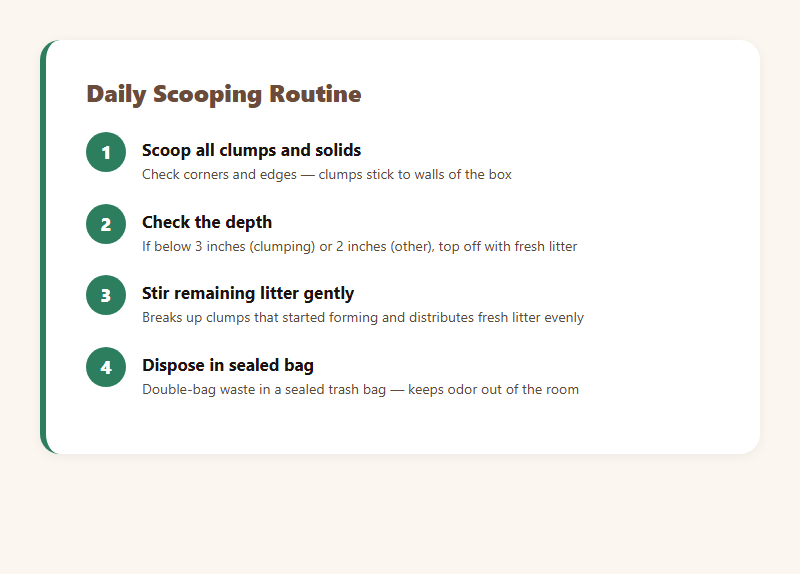
Scooping once a day is the single most effective thing you can do to extend litter life and keep the box acceptable to your cat. Here is the routine that keeps things clean without turning it into a project.
Scoop all clumps and solid waste
Use a slotted scoop that matches your litter grain size. Fine-grain litter needs a finer mesh. Scoop slowly so clean litter falls through and only waste stays on the scoop. Check the corners and edges of the box where clumps tend to stick.
Scrape stuck clumps from the bottom
If any clumps have adhered to the pan bottom, use the flat edge of the scoop to loosen them. Stuck clumps indicate the litter depth was too low when the cat used that spot. After scraping, note whether you need to add more litter.
Check the litter depth
After scooping, the depth should still be 3 inches for clumping litter or 2 inches for non-clumping. If it has dropped below that, top off with fresh litter. Pour evenly across the surface and level it with the scoop.
Dispose of waste in a sealed bag
Tie used litter in a plastic bag before dropping it in the trash. A small lined trash can next to the box makes this routine faster. Do not flush clumping litter — it expands in pipes and causes blockages.
Signs your litter needs a full change now
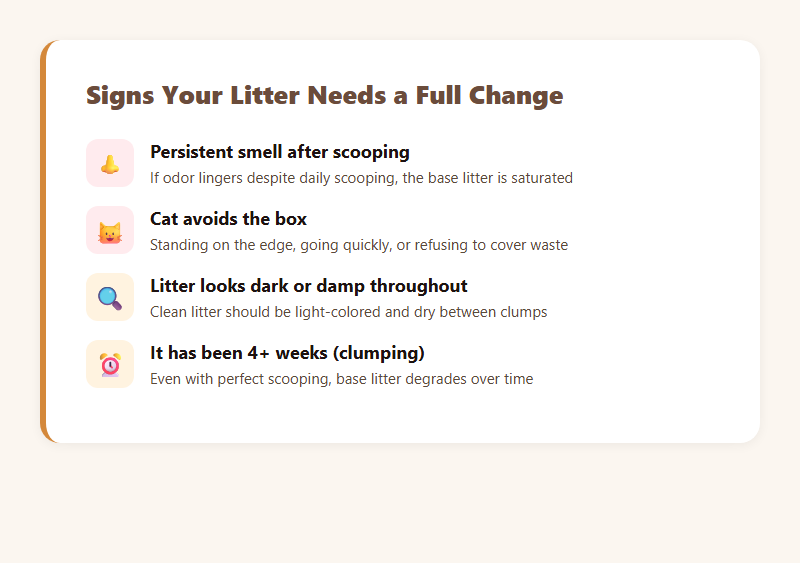
Even if you are scooping daily, the litter eventually reaches a point where scooping is no longer enough. These are the signs that a full dump-and-replace is overdue.
Persistent odor after scooping. If you scoop and the box still smells within a few hours, the remaining litter has absorbed too much residual ammonia and urea. Fresh litter on top of spent litter does not fix this. The entire box needs to go.
Clumps are falling apart during scooping. When the surrounding litter is too saturated to form firm clumps, the clumps break apart as you lift them. That leaves wet residue behind, which accelerates odor and makes the next scoop even worse.
The cat is avoiding the box. Cats have a much lower odor threshold than humans. A box that smells acceptable to you may already smell unacceptable to your cat. If your cat starts going next to the box instead of in it, or uses the box but does not cover, the litter is likely past its useful life.
Visible moisture at the bottom. If you tilt the box and see liquid pooling or a damp layer at the bottom, the litter has failed. This happens more often with non-clumping and crystal litter. By the time moisture reaches the bottom, the box needs a full change and a wash.
Color change in crystal litter. Fresh silica crystals are translucent or white. As they absorb urine, they turn yellow. Once most of the crystals have changed color, they are saturated and no longer absorbing.
Multi-cat households: adjust everything
Every timeline above is for one cat and one box. Multiple cats change the math.
Scooping frequency. Two cats using one box may need scooping twice a day instead of once. Three cats sharing boxes need at minimum twice daily scooping of each box.
Full change frequency. Cut the single-cat timeline roughly in half for two cats sharing a box. Clumping litter that lasts 3 to 4 weeks with one cat lasts about 2 weeks with two cats. Non-clumping litter that lasts a week with one cat lasts 3 to 4 days with two.
Number of boxes. The standard guideline is one box per cat plus one extra. Two cats should have three boxes. This is not about litter companies selling more litter. Cats avoid boxes that smell like another cat. More boxes mean each box gets less traffic and lasts longer between changes.
Litter consumption. Two cats do not just double consumption. They slightly more than double it because the litter bed degrades faster under heavier use, requiring more frequent topping off and more frequent full changes. Budget for 2.2 to 2.5 times single-cat consumption rather than a flat 2x.
How to make litter last longer without cutting corners
Litter costs add up, especially in multi-cat homes. These adjustments extend useful life without compromising box cleanliness.
Maintain the right depth. Three inches for clumping, two for non-clumping. Too shallow and clumps hit the bottom and stick. Stuck clumps waste the litter around them and force earlier full changes. Proper depth lets clumps form properly and separate cleanly.
Scoop every day without exception. Skipping even one day lets urine clumps sit longer, which breaks down surrounding litter and contaminates a larger area. Daily scooping concentrates the waste removal to the clumps themselves and keeps the rest of the bed cleaner.
Use the right scoop mesh for your litter. Fine-grain litter with a coarse scoop drops small clumps back into the box. Those small pieces contaminate clean litter. Match the scoop to the grain size.
Wash the box at every full change. Warm water and mild dish soap. No ammonia-based cleaners (the cat interprets ammonia as a urine marker). A clean box means the new litter starts fresh instead of sitting on a layer of residual odor.
Buy litter that clumps tightly. Tight clumps use less surrounding litter per scoop. A loose-clumping litter wastes more clean litter per scooping session because the broken clump pulls extra material out with it.
How to dispose of used cat litter
Used cat litter goes in the trash, not down the toilet, not in the compost, and not in the yard without precautions.
Trash disposal (recommended). Scoop waste into a small plastic bag, tie it closed, and drop it in your regular trash. A small step-lid trash can lined with bags next to the litter box makes daily scooping faster. For full box changes, double-bag the old litter and put it out with household waste.
Never flush clumping litter. Clumping clay expands in water. It will clog pipes, and the repair cost is significantly more than the cost of trash bags. Even litter marketed as "flushable" is risky for older plumbing and septic systems.
Compost considerations. Cat feces can contain Toxoplasma gondii, a parasite that survives most home composting temperatures. Do not compost cat litter for use on edible gardens. Some municipalities accept cat waste in yard waste collection if it is clearly labeled, but check local regulations first.
Outdoor disposal. If you bury used litter in a yard, keep it away from vegetable gardens and water sources. Dig at least 6 inches deep and cover completely. This is practical for rural homes but not suitable for shared or small lots.
Litter disposal systems. Dedicated cat litter disposal pails (like the Litter Genie or Litter Champ) seal waste in multi-layer bags that contain odor between trash pickups. They are worth the investment in apartments and homes where the trash goes out less frequently than every other day.
FAQ
1How often should you completely change cat litter?
For clumping clay litter with daily scooping, a full change every 2 to 4 weeks. Non-clumping litter needs a full change every 5 to 7 days. Silica crystals last 2 to 4 weeks. Pellet litter needs replacing every 1 to 2 weeks. All timelines are for one cat per box and assume daily scooping.
2Can you just add litter on top instead of changing it all?
Topping off between full changes is fine and recommended to maintain proper depth. But topping off is not a substitute for a full change. Fresh litter on top of spent litter does not remove the accumulated ammonia, bacteria, and fine particles at the bottom of the box. Eventually the whole box needs dumping, washing, and refilling.
3How do you know when cat litter needs to be changed?
Persistent odor after scooping, clumps falling apart when you lift them, the cat avoiding the box, visible moisture at the box bottom, and yellowed silica crystals are all signs that the litter is past its useful life and needs a full change.
4Is it OK to scoop litter every other day instead of daily?
It is not ideal. Urine clumps that sit for 48 hours break down surrounding clean litter, which accelerates the timeline for a full box change and increases odor. Daily scooping takes 60 to 90 seconds and is the single cheapest way to make litter last longer and keep the box acceptable to the cat.
5How often should you wash the litter box itself?
Wash the box every time you do a full litter change. Use warm water and mild dish soap. Avoid bleach and ammonia-based cleaners — ammonia smells like a urine marker to cats and can cause box avoidance. Let the box dry completely before adding fresh litter.
Find the right litter for your home
The right litter prevents most odor and cleanup problems before they start. These guides cover the tradeoffs that matter.